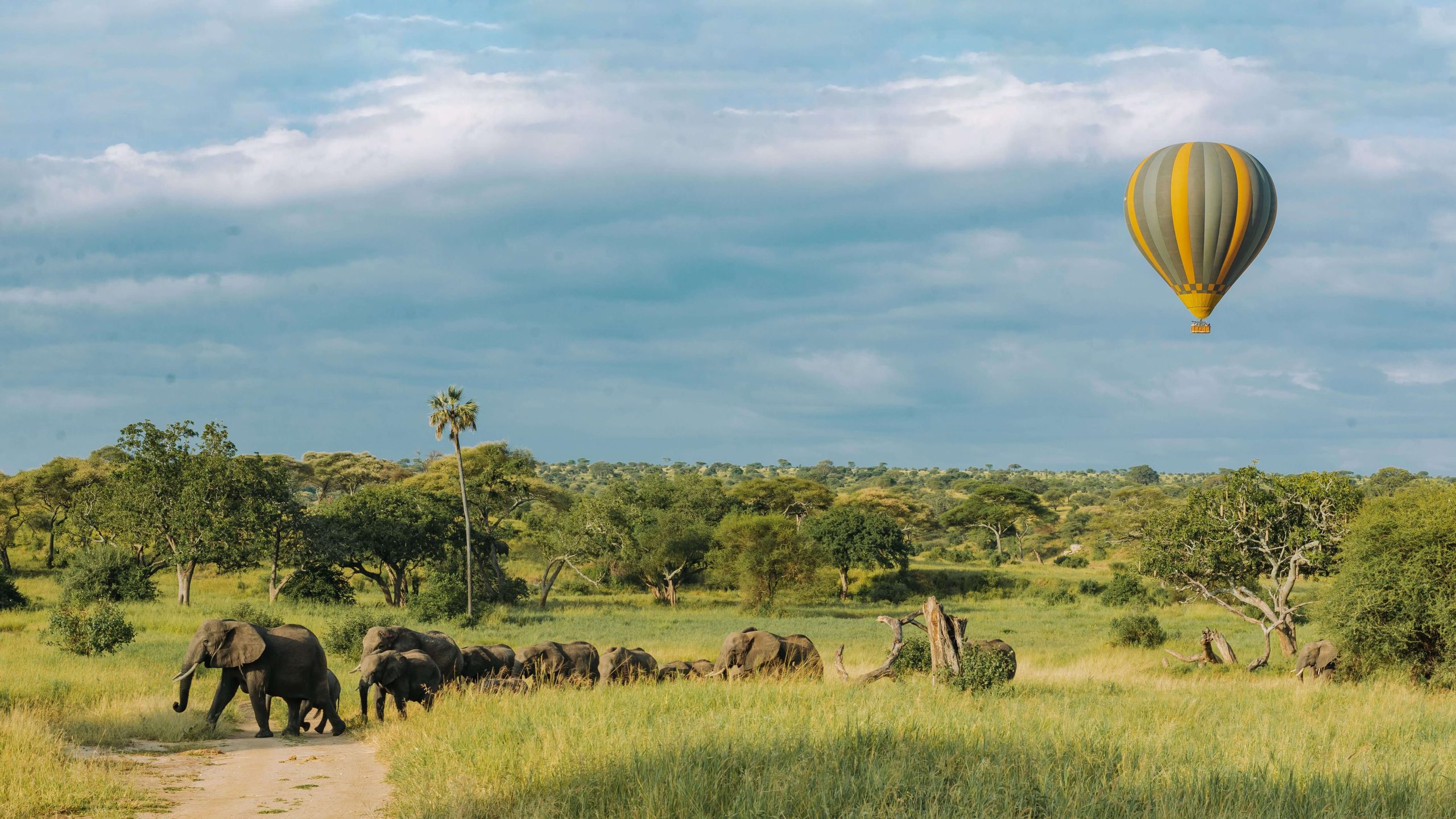

January is one of the best months to visit the Serengeti: the Great Migration herds settle on the Ndutu short-grass plains in the southern ecosystem, the weather is warm and relatively dry, and calving season begins. Expect daytime highs of 28-29°C, fewer showers than November and December, and some of the most concentrated predator action on the continent.
The honest trade-off is that January is a transition month. The herds are spread across a wide area rather than packed into one dramatic mass, and the dry spell between the short and long rains can mean dust one day and a sudden mud-slick track the next. Some visitors arrive expecting peak-February drama and find that the main calving surge is still building.
Veteran Tanzanian guides often describe January as the month that rewards flexibility. Travelers who plan around where the animals are, not around a fixed date on the calendar, tend to come home with the best sightings.
Is January a Good Time to Visit the Serengeti?
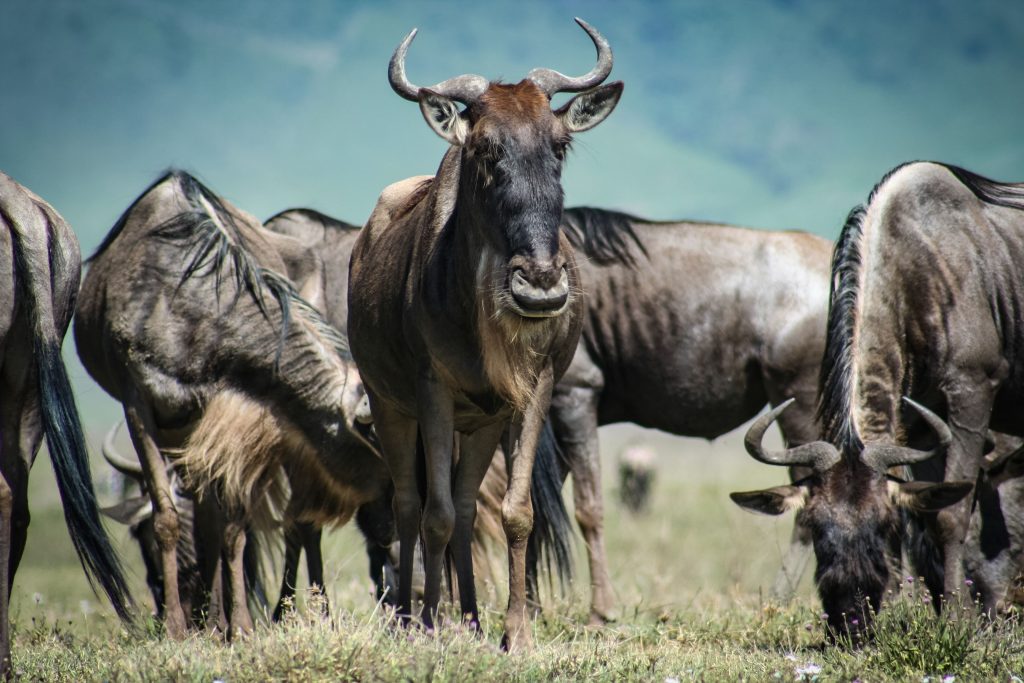
Yes, particularly if your priorities are predator sightings, newborn wildlife, and a warm, mostly dry climate. January sits in the sweet spot after the festive-season rush and before the late-February calving peak, when the southern plains are at their busiest.
Who January Suits Best
- First-time safari planners who want a reliable mix of wildlife and workable weather.
- Wildlife photographers chasing hunting behavior, golden light over open grassland, and newborn calves.
- Post-holiday travelers who want a safari right after New Year's.
- Predator enthusiasts who want lions, cheetahs, and hyenas working the herds in daylight.
Who Might Want a Different Month
If your heart is set on a dramatic river crossing, January is the wrong month. The crossings of the Mara River happen in the northern Serengeti, usually between July and October, while in January the herds are hundreds of kilometers south.
Travelers who dislike any chance of rain should also plan for a few showers. They tend to arrive as short afternoon bursts, but they can happen.
Serengeti Weather in January: What to Actually Expect
January falls in a dry spell between the short rains (November-December) and the long rains (March-May). Feedback from safari travelers consistently points to pleasant conditions, with warm days and cool mornings.
Temperatures
- Daytime highs: around 28-29°C on the plains.
- Early mornings: noticeably cooler, often in the mid-teens °C, which makes a light fleece worthwhile for pre-dawn drives.
- Evenings: mild at camp, though the Ngorongoro Highlands can feel much cooler on the way in or out.
Rainfall
Rainfall is lower than in November and December, but not zero. Expect scattered showers, usually brief, with plenty of sunshine in between.
Rain can still matter for logistics. A single heavy shower can turn the black cotton soil around Ndutu into slippery mud, slowing game drives and occasionally changing route options for the day.
Dust and Mud Transitions
The honest picture is two seasons in one. Dry stretches kick up fine dust that coats cameras, binoculars, and lenses. After rain, the same tracks turn sticky.
Good guides read the ground daily and choose routes accordingly. This is where an experienced driver-guide earns their fee, so ask your operator how they match guides to the Ndutu region.
Recommended for dusty drives: a dust-proof camera rain and dust cover that fits a 100-400mm lens.
The Great Migration in January: Where the Herds Are
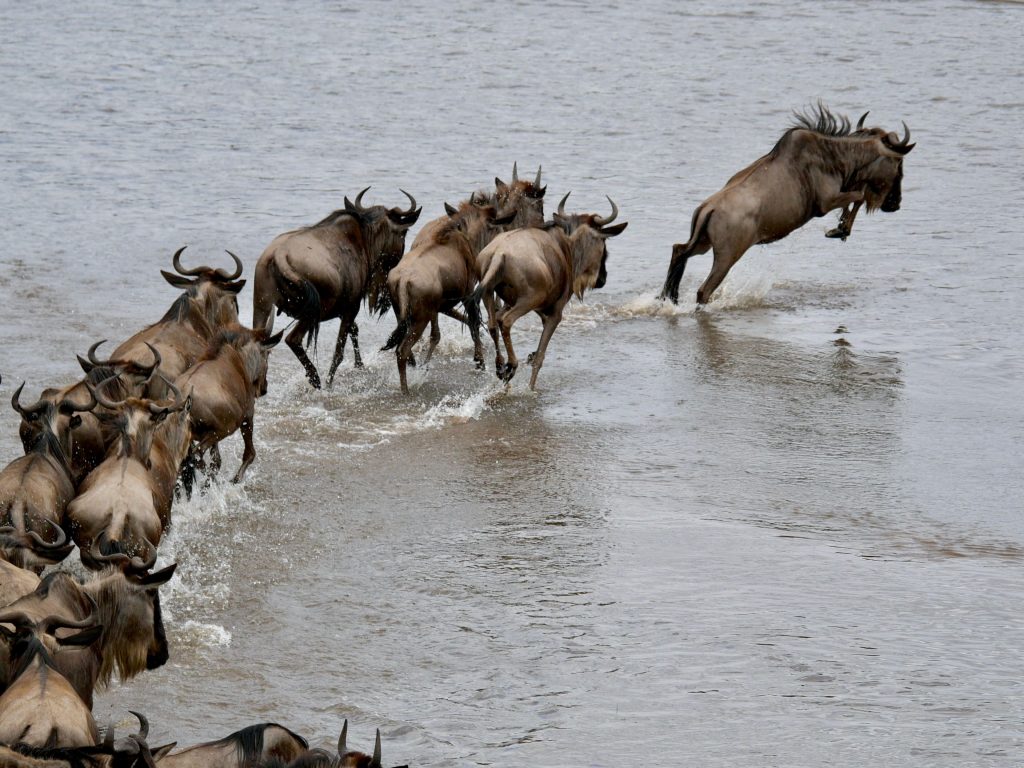
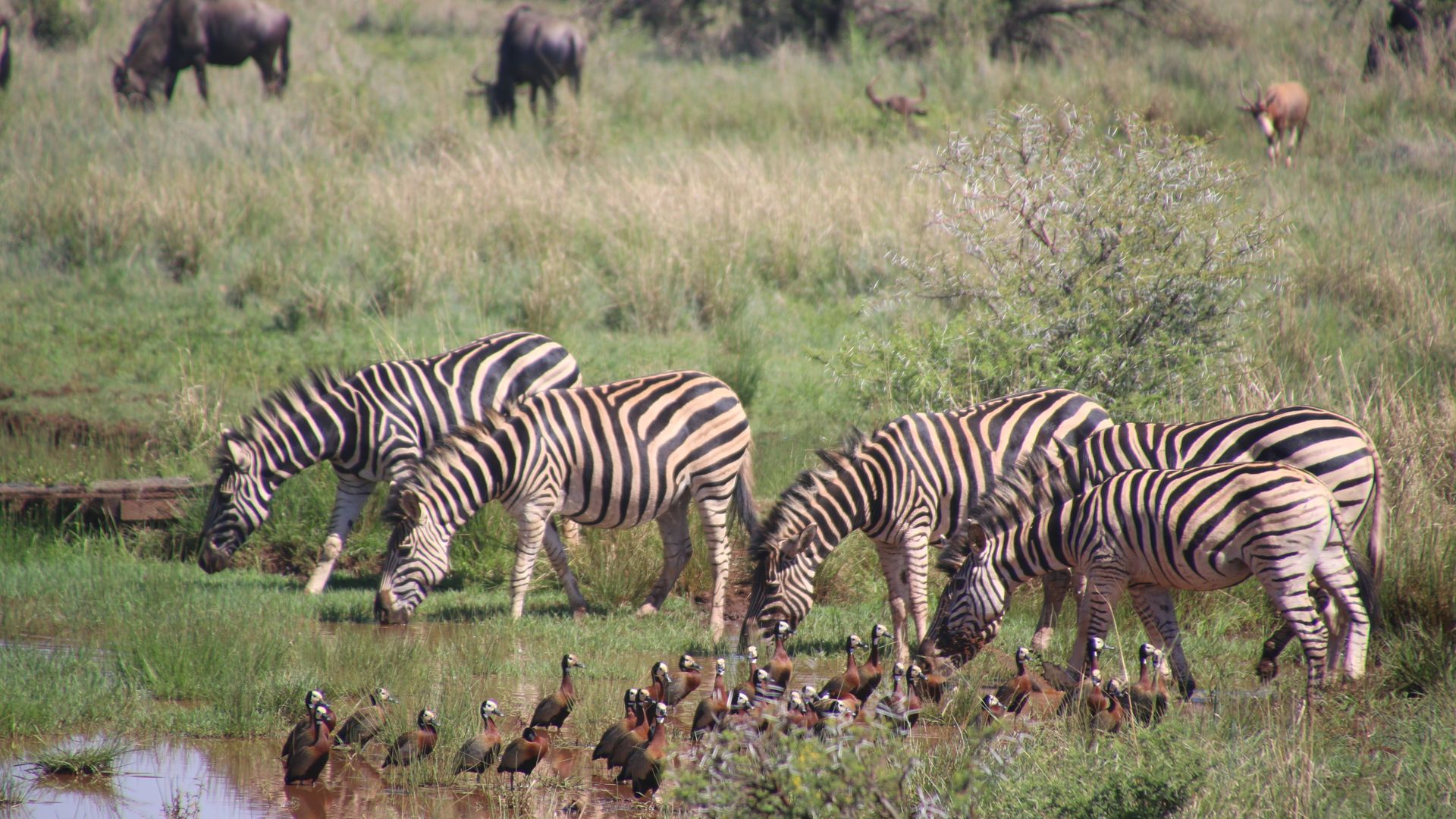
By January, the bulk of the migration is in the southern Serengeti and the Ndutu region, which straddles the border with the Ngorongoro Conservation Area (NCA). Roughly 1.5 million wildebeest, along with hundreds of thousands of zebra and gazelle, are drawn here by fresh grass nourished by the short rains.
Why the Herds Come South
The short-grass plains here grow on volcanic soils rich in minerals, especially phosphorus and calcium. Pregnant wildebeest cows need this grazing to support lactation, which is why the herds gather here before giving birth.
Calving Season Begins
Wildebeest calving is remarkably synchronized. Most calves are born within a few weeks, typically from late January through February, with the peak usually falling in February.
In January you will often see:
- Early-arriving newborns with their mothers.
- Heavily pregnant cows spread across the plains.
- Large mixed herds of wildebeest, zebra, and Thomson's gazelle.
Where Exactly to Look
- Ndutu short-grass plains: the core of the action.
- Kusini and the Gol Mountains area: open grassland popular with cheetahs.
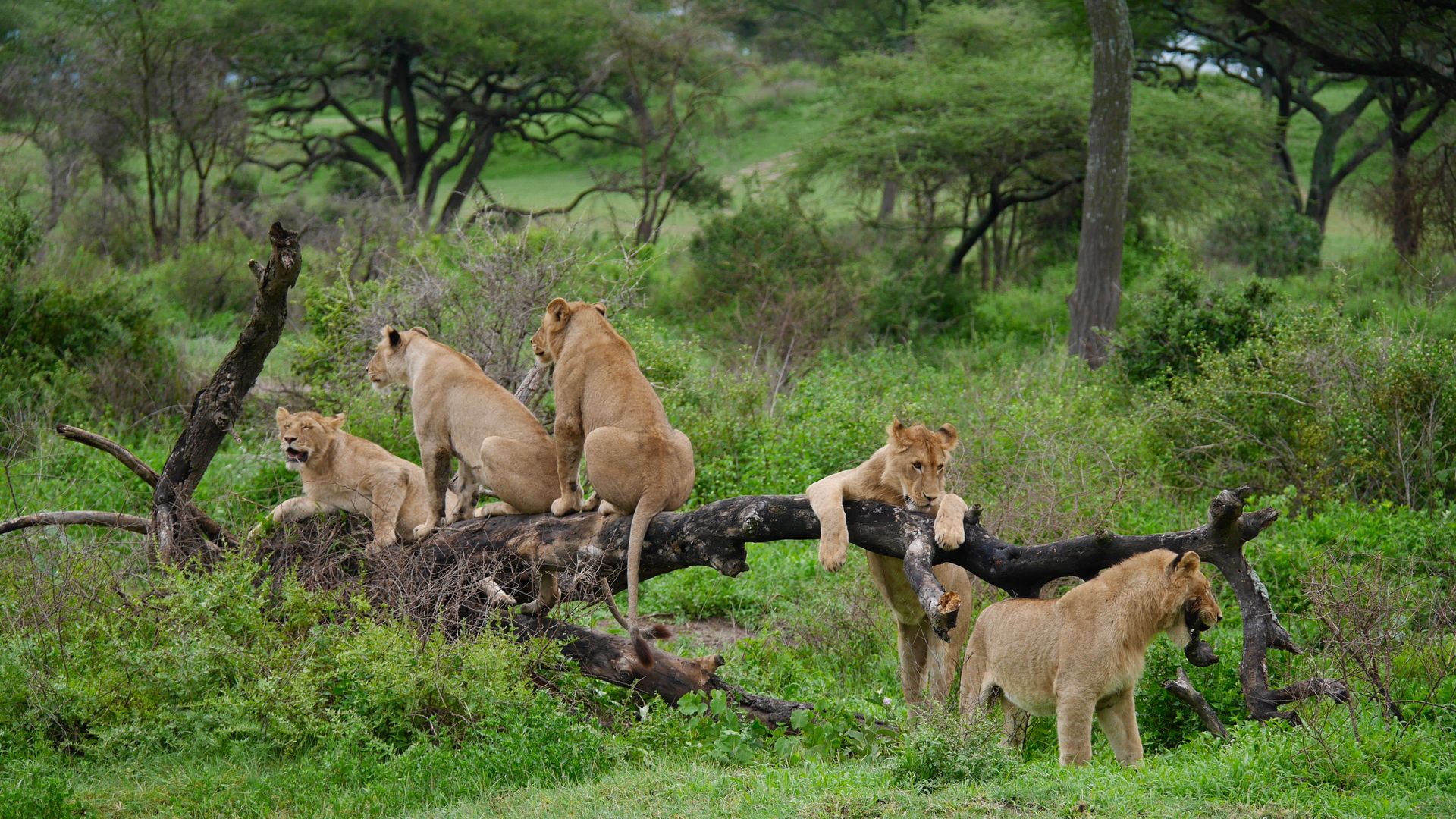
- Lake Ndutu and Lake Masek margins: acacia woodland where lions rest.
- Naabi Hill Gate area: the eastern gateway, with wide views over the plains.
Remember that the herds move. The exact position of the largest concentrations changes with rainfall and grazing, so ask your guide for the latest intelligence from other drivers and camp staff.
Check Live Seat Availability & Pricing. Lock in your rate early with zero financial risk.
Predator Action: Lions, Cheetahs, and Hyenas
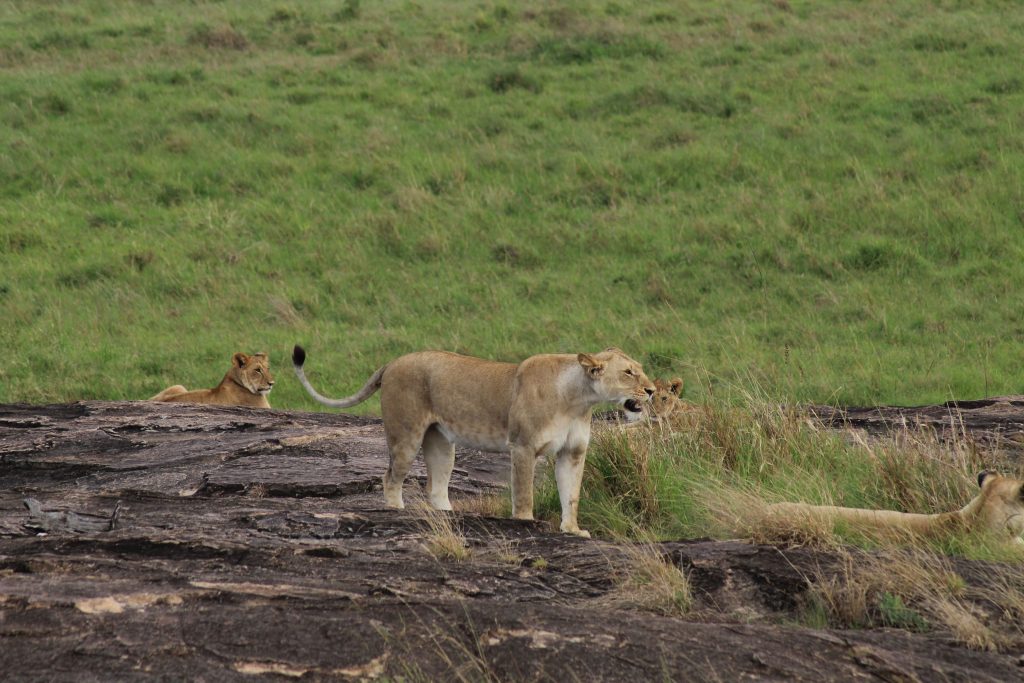
Predator density is the headline of January and February in the south. Newborn calves are vulnerable, and carnivores know it.
Lions
Prides use the woodland edges around the lakes for shade, then move onto the plains to hunt. Early mornings and late afternoons offer the best chances of seeing active hunts.
Cheetahs
Cheetahs thrive on the open short-grass plains, where their speed and long sightlines work in their favor. They often hunt Thomson's gazelle fawns as well as young wildebeest.
Guides frequently use termite mounds and small rises as vantage points to spot them, so scan the horizon as well as the grass.
Spotted Hyenas
Hyenas are active hunters, not just scavengers. They commonly work in groups at dawn and dusk, and they often follow the herd closely.
Jackals and Other Opportunists
Black-backed jackals, vultures, and marabou storks gather wherever there is a kill or birthing activity. Watching the sky for circling vultures can lead you to the action.
Photography Tips for Predator Action
- Use a 100-400mm or 150-600mm lens for hunting scenes.
- Shoot at a fast shutter speed (1/1000s or faster) for running predators.
- Keep a second body or a wide lens ready for landscape context.
For distant scanning, a pair of Nikon Monarch 5 10x42 Binoculars offers a bright, sharp view without excess weight.
Early January vs. Late January vs. Central Seronera: Comparison Table
| Factor | Early January (Post-Holiday) | Late January (Calving Onset) | Central Serengeti (Seronera) |
|---|---|---|---|
| Crowds | Busier near New Year, easing quickly | Moderate, building toward February | Steady year-round |
| Herd location | Spread across the southern plains | Concentrating around Ndutu | Resident wildlife, fewer migratory herds |
| Calving activity | Early births only | Rising sharply | Not the focus |
| Predator action | Good | Excellent | Strong big-cat sightings |
| Weather | Warm, scattered showers | Warm, mostly dry | Warm, mostly dry |
| Best for | Post-holiday departures | Photographers, predator fans | Classic Serengeti plains and leopard-spotting |
| Booking feel | More availability on group-joining safaris | Higher demand, rolling seat allocations | Flexible options |
Getting There: JRO to Ndutu Airstrip (NDU)
The easiest international entry point is Kilimanjaro International Airport (JRO), which sits between Arusha and Moshi. From there, you have two main routes to the south.
Option 1: Fly (Fastest)
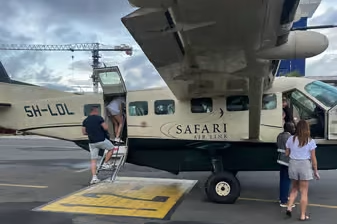
Scheduled light-aircraft services connect the Northern Circuit to the southern airstrips, including Ndutu Airstrip (NDU). Flights typically run from Arusha Airport (ARK) or JRO and may stop at Lake Manyara (LKY) or Seronera (SEU) along the way.
Light aircraft usually enforce a 15 kg soft-sided duffel limit, so pack carefully. Hard-shell suitcases are generally not accepted.
Option 2: Drive (Scenic and Budget-Friendly)
The road journey from Arusha usually takes a full day, passing through Lake Manyara, up to the Ngorongoro Highlands, and down toward Ndutu. Many travelers pair the drive with a stop at the Ngorongoro Crater.
Allow extra time in case of rain, since the final stretch can be slow after showers.
Sample Routing Logic
- Day 1: Arrive at JRO, transfer to Arusha for the night.
- Day 2: Fly or drive south toward Ndutu.
- Day 3-4: Full-day game drives on the plains.
- Day 5: Optional Ngorongoro Crater visit or move to Seronera.
Park Gates, Fees, and Permits
- Naabi Hill Gate: the main eastern entrance to the Serengeti National Park, used by vehicles coming from the Ngorongoro direction.
- Ndabaka and Klein's Gates: western and northern access points.
- Ngorongoro Conservation Area fees: separate from Serengeti park fees, and they apply when you travel through or stay in the Ndutu region.
Fees are quoted in US dollars per person per day and are revised periodically, so confirm current rates before you finalize your budget. Ask your operator to itemize park, conservation, concession, and vehicle fees up front.
Where to Stay in January
Most visitors choose between permanent lodges and seasonal tented camps near Ndutu.
- Seasonal camps move to follow the herds, putting you close to the action.
- Permanent lodges offer more amenities and stable locations.
- Mid-range camps often provide the best value in the January shoulder period.
While peak calving season accommodations fill quickly, operators and group-joining safaris maintain rolling seat allocations year-round. Look for terms like Reserve Now & Pay Later, Free Cancellation up to 24 hours, and Flexible Group Joining Options.
Check Live Seat Availability & Pricing. Lock in your rate early with zero financial risk.
Pro Tip: Book your January trip around late January rather than the first week if your goal is calving and predator action. The first week is more expensive and busier because of the holidays, while the last ten days of the month put you closer to the calving surge, often at better value.
What to Pack for the Serengeti in January
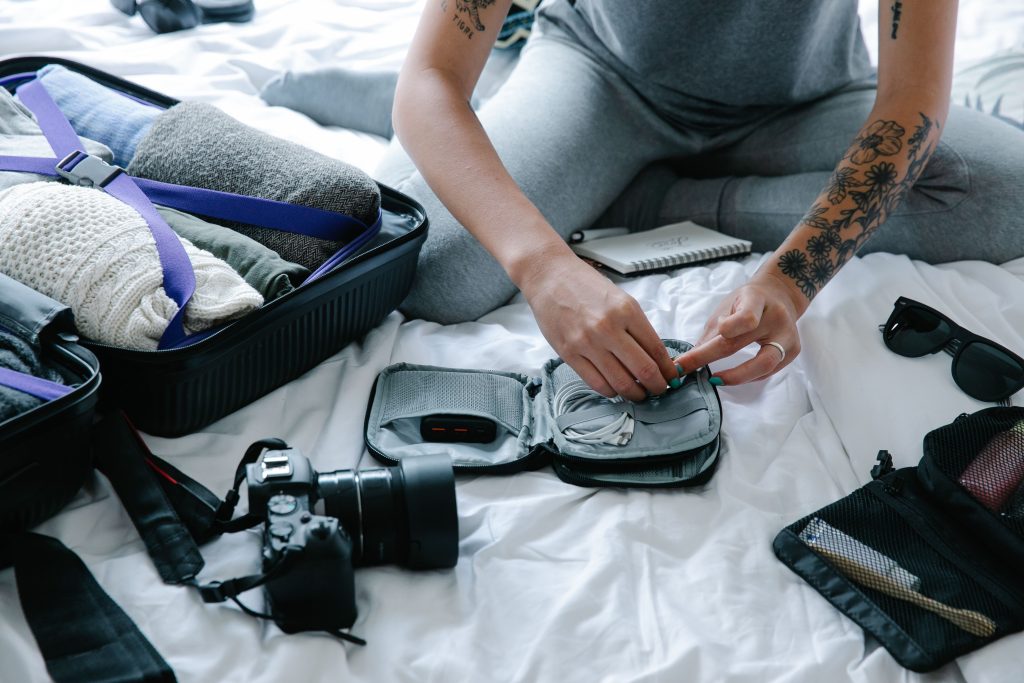
January calls for light layers, sun protection, and dust-proof gear.
Clothing
- Lightweight, breathable safari shirts in neutral colors (khaki, olive, tan).
- A light fleece or windbreaker for dawn drives.
- Wide-brimmed hat and UV-rated sunglasses.
- Closed-toe walking shoes or light boots.
Camera and Optics
- Telephoto lens (100-400mm minimum).
- Dust-proof camera covers and a microfiber cloth.
- Bean bag for stabilizing your lens on the vehicle roof.
- Binoculars (8x42 or 10x42).
Electronics and Extras
- Portable power bank (20,000 mAh recommended) for long game-drive days.
- Universal travel adapter (Tanzania uses Type D and G plugs).
- Reusable water bottle, sunscreen, and insect repellent.
Read a detailed guide about what to pack for a Serengeti safari.
Key Takeaways for January Travelers
- Plan for warm days around 28-29°C with scattered, short showers.
- Target the Ndutu short-grass plains for herds and early calving.
- Aim for late January for rising calving activity and strong predator sightings.
- Use JRO as your international gateway, with a flight or drive south to NDU.
- Pack light layers, dust protection, and a 15 kg soft duffel for light aircraft.
- Check live availability early to secure the best camps and group departures.
Frequently Asked Questions
Is January a good time to visit the Serengeti?
Yes, January is a strong month, with warm weather, lower rainfall than late-year months, and wildebeest herds gathering in the southern Serengeti. Predator action is high as calving season begins.
Where is the Great Migration in January?
In January, the herds are concentrated in the southern Serengeti and Ndutu region on the short-grass plains. They remain there through February and into March for calving.
What is the weather like in the Serengeti in January?
Expect warm days around 28-29°C, cooler mornings, and relatively low rainfall compared with November and December. Short showers are still possible, so pack light rain protection.