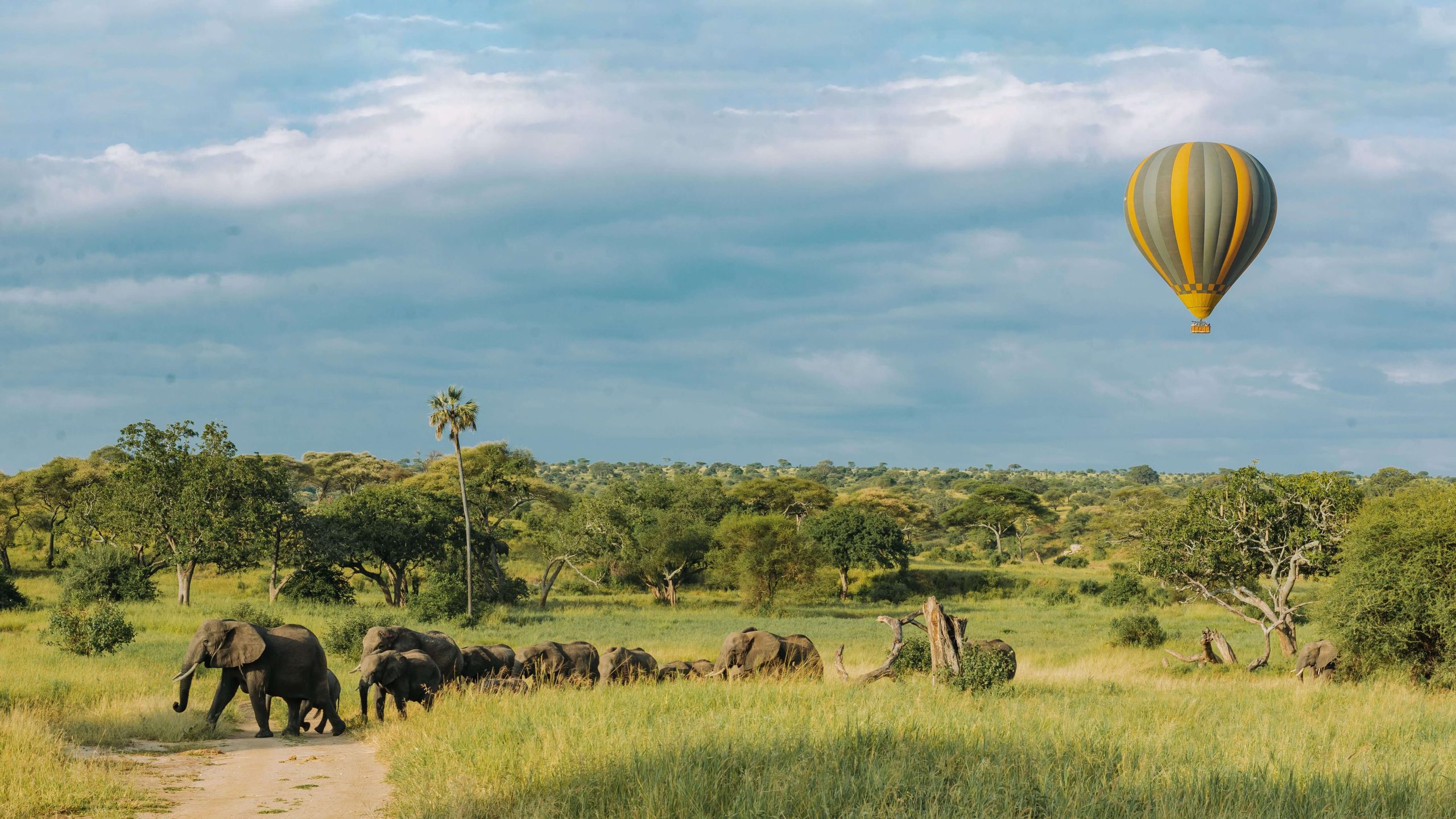

Planning a Serengeti safari from Australia means booking flights through a Middle Eastern or East African hub, budgeting in AUD for USD-denominated park fees, and timing your trip to match the Great Migration's river crossings. The honest trade-off Aussies rarely hear about upfront: you're looking at 22-30 hours of total travel time each way, so the journey itself needs its own plan, not just the safari. Getting the logistics right from the start — flights, seasons, and costs — is what separates a smooth trip from a stressful one, and it's exactly why so many travellers start with a structured look at the best Tanzania safari packages before locking in dates.
Veteran Tanzanian guides often note that Australian guests tend to arrive more jet-lagged than European or American travellers simply because of the sheer distance involved, so this guide is built around that reality — not a generic safari checklist.
Flight Routes From Australia to the Serengeti
There's no direct flight from Australia to Tanzania. Every route from SYD, MEL, or PER involves at least one, usually two, connections before you reach Kilimanjaro International Airport (JRO), the main gateway for Serengeti-bound travellers.
The Three Main Hub Options
- Dubai (DXB) — Emirates flies daily from Sydney, Melbourne, and Perth into Dubai, with an onward connection to JRO via Emirates or a codeshare partner.
- Doha (DOH) — Qatar Airways serves all three Australian cities and has strong onward connectivity to JRO, often with a shorter layover than the Dubai routing.
- Addis Ababa (ADD) — Ethiopian Airlines routes via Asian hubs like Singapore or Bangkok, then on to Addis Ababa, before a short hop to JRO; this is frequently the cheapest option but adds a third leg.
Field feedback from Aussie safari travellers consistently points to Doha as the sweet spot between price and total journey time for east coast departures, while Perth-based travellers often find Dubai routing shaves several hours off the connection.
Flight Route Comparison for Australian Departure Cities
| Departure City | Hub Option | Typical Total Travel Time | Approx. Layover | Best For |
| Sydney (SYD) | Doha (DOH) | ~24-26 hrs | 2-4 hrs | Balance of price and speed |
| Melbourne (MEL) | Dubai (DXB) | ~23-25 hrs | 2-3 hrs | Frequent departures, strong onward JRO links |
| Perth (PER) | Dubai (DXB) | ~19-21 hrs | 2-3 hrs | Shortest overall journey for Aussies |
| Any city | Addis Ababa (ADD) | ~27-30 hrs | 4-8 hrs | Budget-conscious travellers with flexible time |
Pro Tip: Book your JRO arrival for the early afternoon, not the evening. It gives you daylight for the 45-60 minute transfer to Arusha or Moshi and means you're not navigating an unfamiliar hotel check-in at 11 pm after 24+ hours in transit.
Choosing the Right Season: Aussie Winter Meets the Great Migration
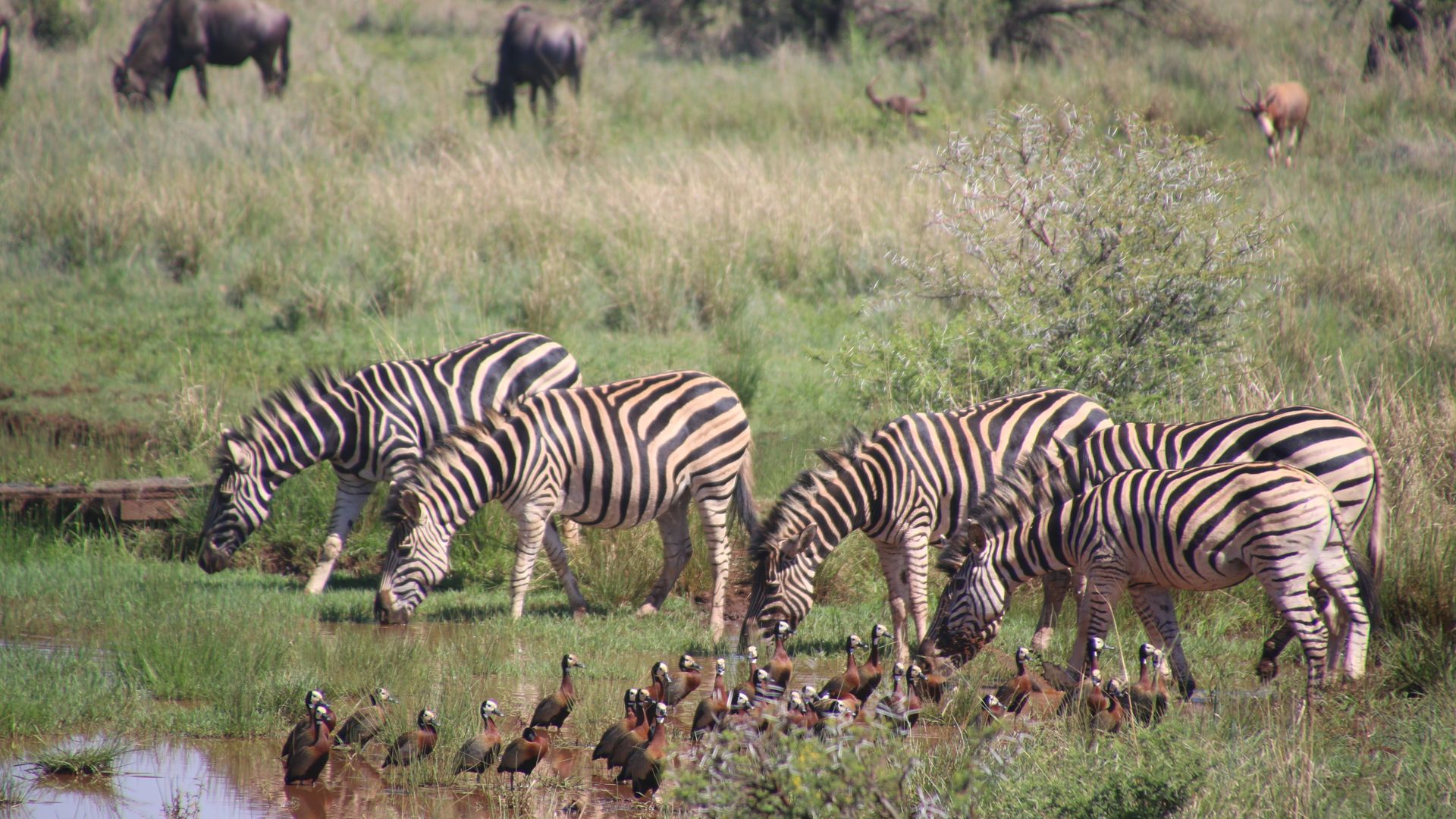
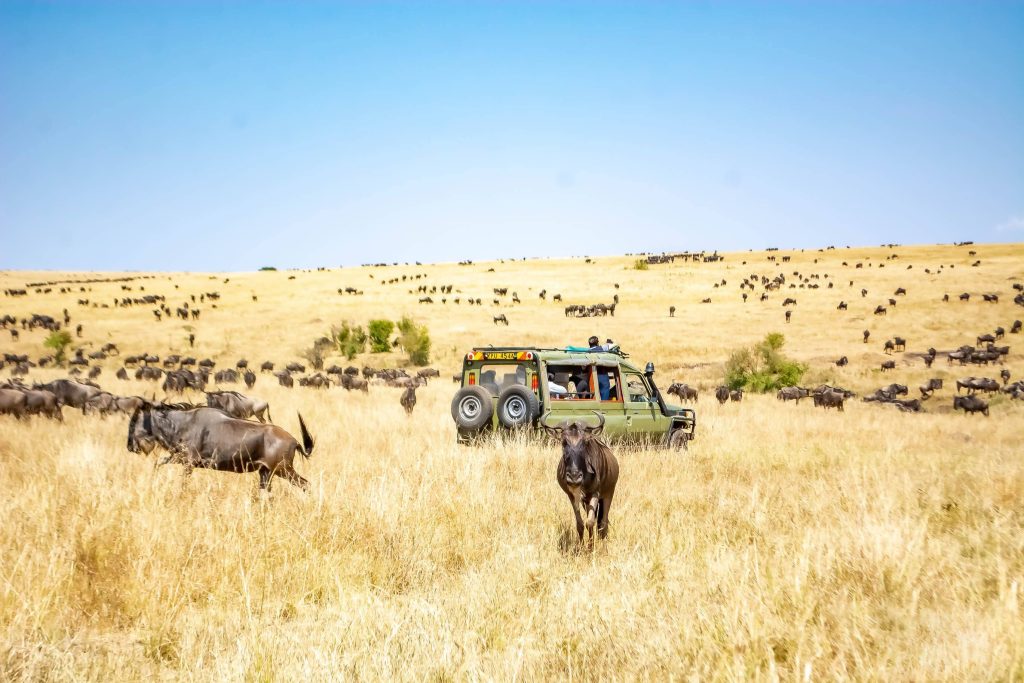
This is where Australians have a genuine, underused advantage. Your winter — July through September — lines up almost perfectly with East Africa's dry season, which is also when the Great Migration's dramatic river crossings happen in the Northern Serengeti, particularly around the Mara River.
Why This Window Works So Well for Aussies
- School holidays alignment: The July school holiday period overlaps with peak migration viewing, making it easier to travel with kids without pulling them out of term.
- Escaping Australian winter for African dry heat: Daytime temperatures in the Serengeti during this window typically sit between 25-28°C, a welcome contrast to a Melbourne or Sydney July.
- Predictable game viewing: Dry conditions concentrate wildlife around remaining water sources, making sightings far more consistent than in the wetter months.
Guides working out of the Seronera area report that river crossing activity is never guaranteed on any single day, but late July through September is statistically the strongest window for witnessing wildebeest attempting the Mara River crossings.
The Trade-Off Nobody Mentions
- This is also peak season pricing, so accommodation and permit costs run 20-40% higher than the November-May window.
- Popular camps near the Mara River book out 9-12 months in advance for this period.
- Vehicle congestion at major crossing points can be significant, since every operator in the region is chasing the same sightings.
Budgeting in AUD: What a Serengeti Safari Actually Costs
Nearly every fee in Tanzania's safari industry — park entry, conservation fees, camping fees — is quoted and paid in USD, which means Australians are exposed to currency conversion twice: once when they pay their tour operator, and again for any on-the-ground cash expenses like tipping.
Typical Cost Breakdown (Mid-Range Safari, Per Person, 7 Nights)
| Cost Category | USD Estimate | Approx. AUD Estimate* |
| Park & conservation fees | $600-900 | $920-1,380 |
| Mid-range lodge/camp accommodation | $2,500-4,000 | $3,830-6,120 |
| Domestic flights (Arusha to airstrips) | $400-700 | $610-1,070 |
| International flights (return, SYD/MEL/PER) | $1,800-2,600 | $2,750-3,980 |
| Guide tipping (7 days) | $140-210 | $215-320 |
*AUD estimates use an approximate conversion rate and will shift with exchange rate movements — always check current rates before finalising a budget.
Managing the Currency Risk
- Carry USD cash in small denominations (2013 or newer notes only — older notes are frequently rejected) for tipping and incidentals.
- Confirm with your tour operator whether park fees are already bundled into your package price or billed separately on arrival.
- Notify your Australian bank of international travel to avoid card freezes, but don't rely on card payments once you're in the bush — most camps are cash-only for extras.
Pro Tip: Exchange a small amount of USD before leaving Australia for airport transfers and tipping on day one, then use a no-foreign-transaction-fee card for any larger payments made in advance.
Packing for the Journey and the Safari Itself
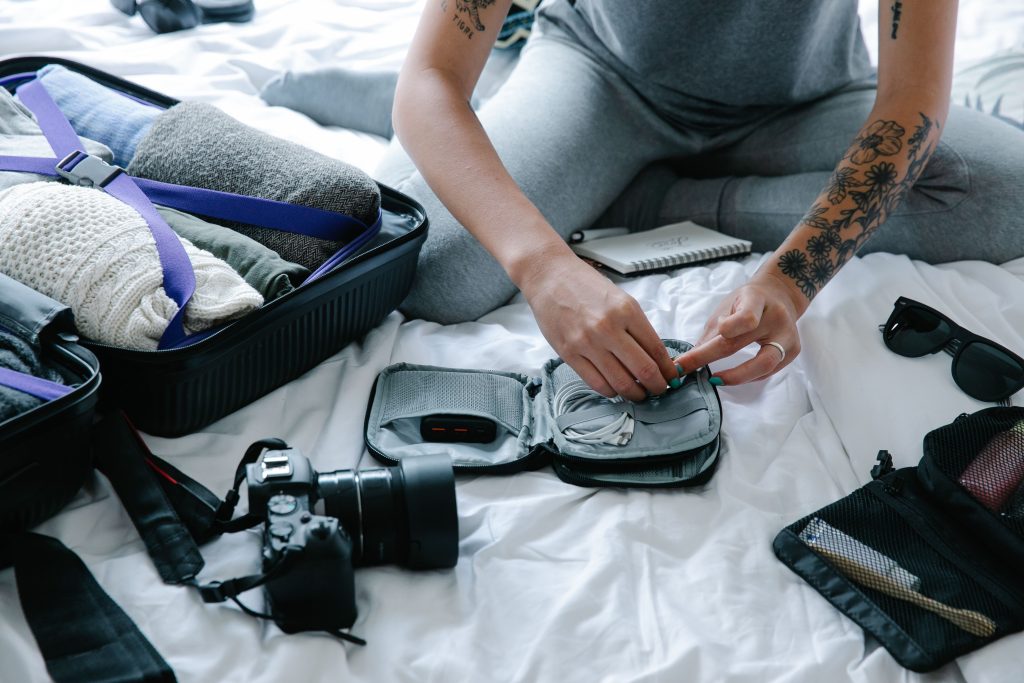
The gear list for a Serengeti trip is different from a standard overseas holiday, largely because of what happens once you leave Arusha. A full breakdown of exactly what to bring, layer by layer, is covered in our dedicated guide to packing for a Serengeti safari, but the essentials worth flagging here are the ones that catch Australians off guard.
What Trips People Up
- Neutral-coloured clothing (khaki, olive, tan) is genuinely functional advice, not a style suggestion — bright colours and especially blue and black can attract tsetse flies.
- Layers matter more than expected: early morning game drives in an open vehicle can sit around 10-15°C, even though the daytime heat climbs into the high 20s.
- A wide-brimmed hat and high-SPF sunscreen are non-negotiable given the equatorial sun exposure during long game drives.
Internal Bush Flights and the 15kg Baggage Limit
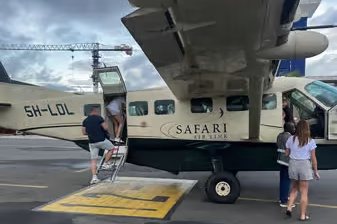
This is one of the most commonly underestimated logistics points for first-time Australian safari travellers. If your itinerary includes flying between camps on small aircraft — common for multi-region Serengeti trips — you'll be flying into small dirt airstrips like Seronera (SEU), Kogatende (KGT), or Lobo (LOA) on light aircraft with strict weight limits.
The Rules You Cannot Ignore
- 15 kg soft-sided duffel bag limit per person, including carry-on items, on most scheduled bush flights.
- Hard-sided suitcases are frequently refused outright because they don't compress into the aircraft's limited cargo hold.
- Excess baggage is sometimes left behind at the originating airstrip and forwarded on a later flight — not a risk you want with essential medication or camera gear.
How to Pack Around This
- Pack a soft-sided duffel as your primary bag, not your main suitcase, and leave the hard case at your Arusha hotel or with your tour operator if doing a multi-camp trip.
- Weigh your bag on a luggage scale before departure — Australian airport scales at check-in won't reflect the bush flight limit at 15kg.
- Wear your bulkiest items (jacket, boots) on the flight itself rather than packing them, since worn items typically don't count toward the weight limit.
Visas, Health Requirements, and Entry Rules for Australians
Australian passport holders need a Tanzania visa, obtainable via the eVisa portal in advance or on arrival at JRO, though pre-arrival application is strongly recommended to avoid queues.
Health and Documentation Checklist
- Yellow Fever certificate: Not required if flying directly from Australia, but mandatory if you're transiting through a Yellow Fever-endemic country en route.
- Malaria prophylaxis: Most travel doctors in Australia recommend starting antimalarials before departure — consult a GP or travel clinic at least 4-6 weeks out.
- Travel insurance with evacuation cover: Given the remoteness of northern Serengeti camps, insurance that includes emergency medical evacuation is considered essential by most operators, not optional.
Building Your Itinerary: How Many Days Do You Actually Need?
- 7 nights is the realistic minimum to justify the travel time and see both the central Serengeti (Seronera) and a northern migration-focused area.
- 10-14 nights allows for a broader loop including Ngorongoro Crater and Tarangire, reducing the feeling of rushing between camps.
- Anything under 5-6 nights on the ground tends to feel disproportionate against a 22+ hour flight commitment each way.
FAQ
How long does it take to fly from Australia to the Serengeti? Total travel time typically runs between 19 and 30 hours depending on your departure city and hub, since there's no direct flight and you'll connect through Dubai, Doha, or Addis Ababa before a final domestic leg to a Serengeti airstrip.
What is the best month to visit the Serengeti from Australia? July through September lines up with the Australian winter school holidays and East Africa's dry season, which is also the strongest window for Great Migration river crossings in the Northern Serengeti.
Do Australians need a visa for Tanzania? Yes, Australian passport holders require a Tanzania visa, which can be applied for online through the eVisa system before departure or obtained on arrival at Kilimanjaro International Airport.